Our Story & Process
Artisan EXcellence
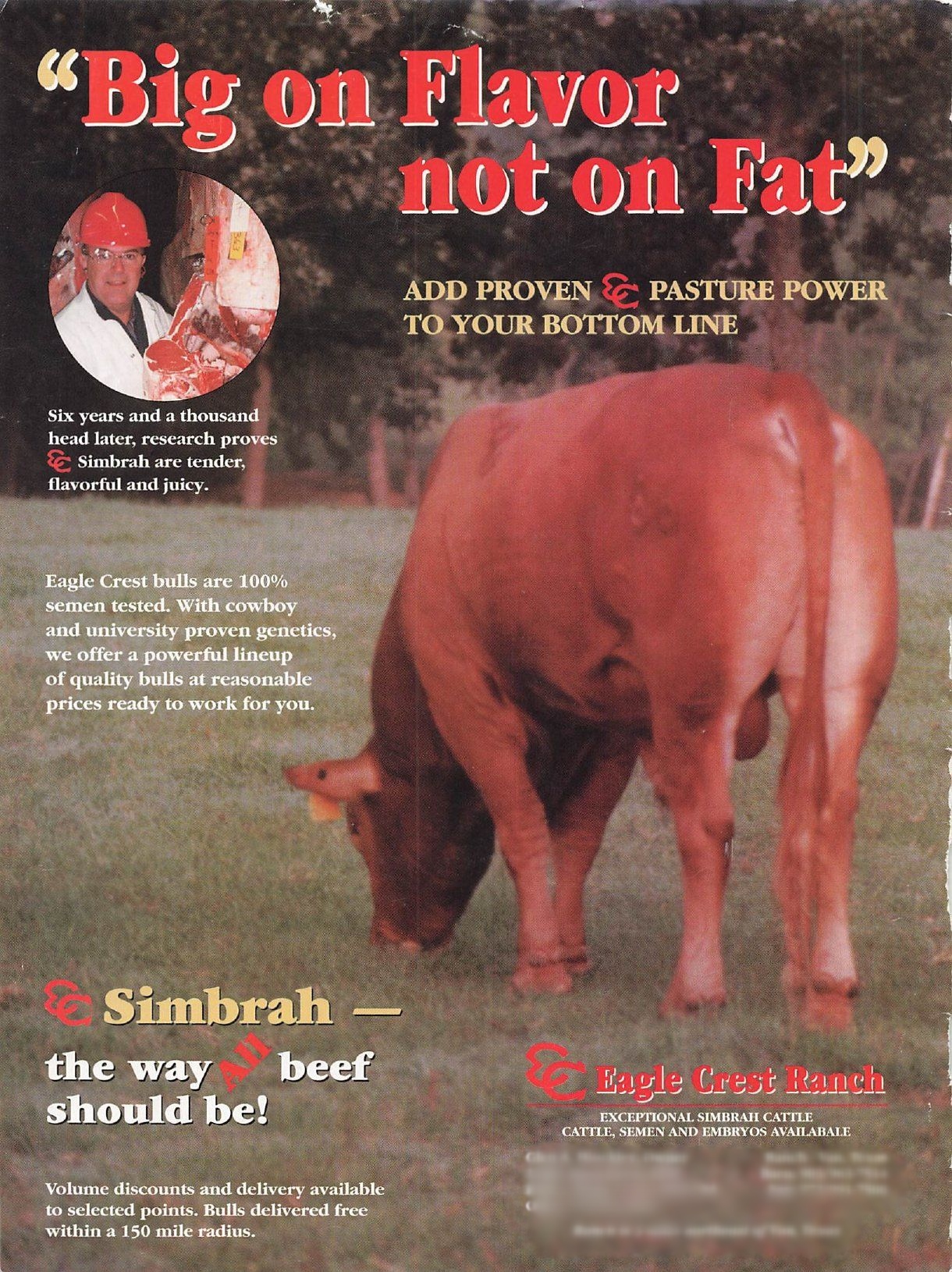
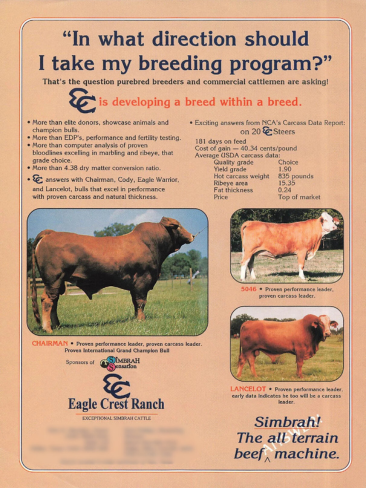
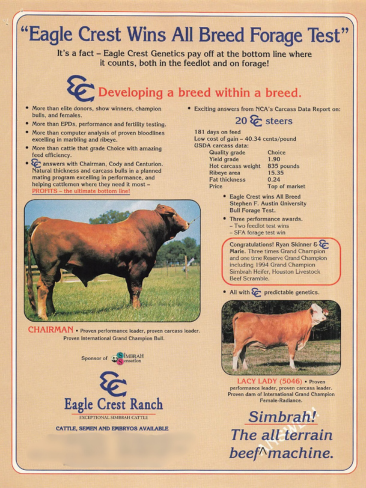
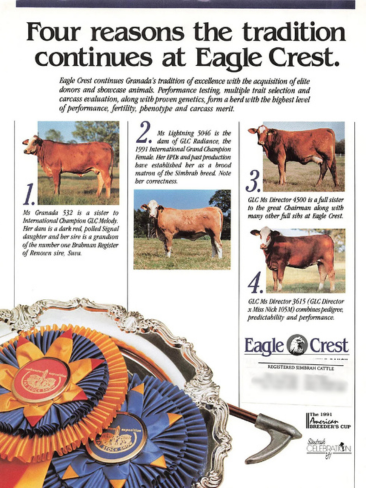
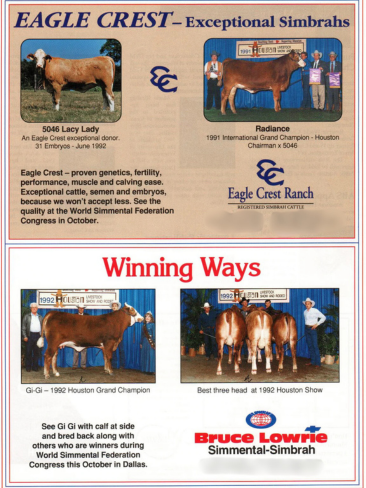
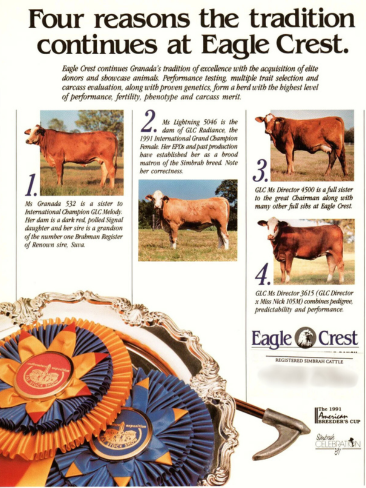
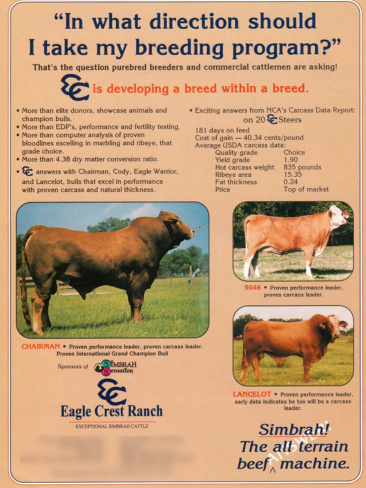
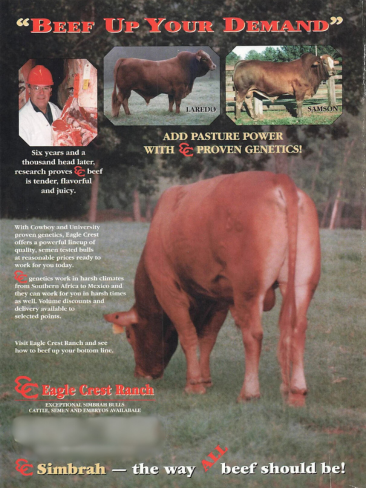
After almost 50 years, EagleCrest has bred registered Beefmaster, Brangus, Simmental, Simbrah, French Parthenaes, Red and Black Angus, and Red and Black Japanese Wagyu. Our interest in extending our research began in 1990 when EagleCrest acquired the top end of Granada land and Cattle Company Simbrah herd together with their extensive carcass data records on four breeds: Simmental, Simbrah, Brahman and Brangus. An emphasis on collecting NCA carcass data and physical trait analysis that would thrive in our east Texas environment.
" EagleCrest is blessed to have rolling hills, natural springs, multiple lakes, and predominantly sandy loam pastures"
EagleCrest has emphasized the significant economic characteristics in its cattle with long production life and excellent feed efficiency of its herd. We have had dozens of females over 14 years of age still fertile and in production producing strapping calves that fit our program and philosophy. Our ethical and philosophical standards also apply to our herds, as all EagleCrest cattle must grade at least 80% choice and 20% prime.
WHAT WE ARE NOT
EagleCrest Ranch is not a commercial commodity cattle operation that competes at the hamburger level chasing pounds of beef.
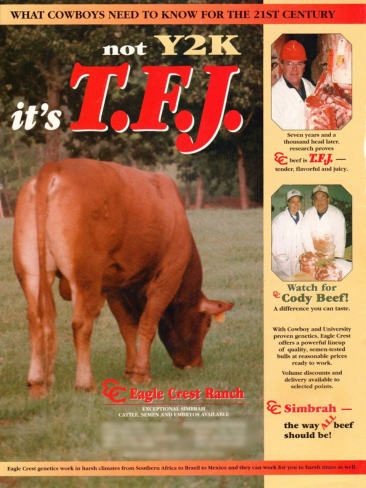
We have created a market niche of exceptional quality that focuses on TFJ: Tender, Flavorful, and Juicy.
EagleCrest competes at the highest level of quality beef for the best eating experience at high-end restaurants & in your home with your family.
About Us
“They who wait for the Lord shall renew their strength; they shall mount up with wings like eagles; they shall run and not be weary; they shall walk and not faint.”
Isaiah 40:30-31
EagleCrest Ranch is data & result driven with research of over 2000 animals that have been studied in collaboration with Texas Tech, Mississippi State, Texas A&M & Johns Hopkins. Our mission is to provide tender flavorful & juicy meat.
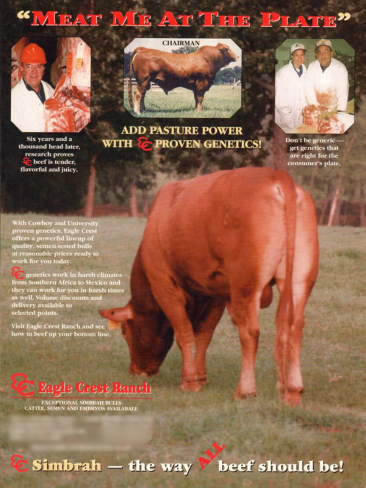
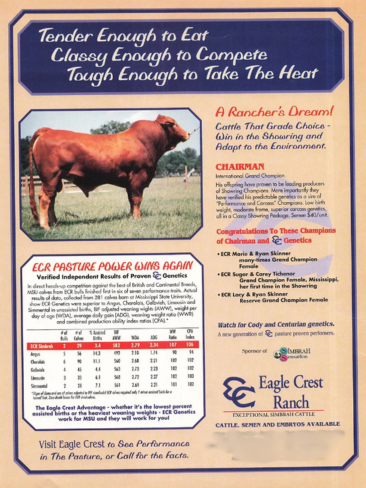
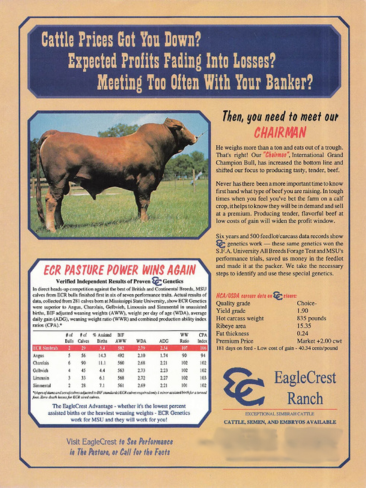
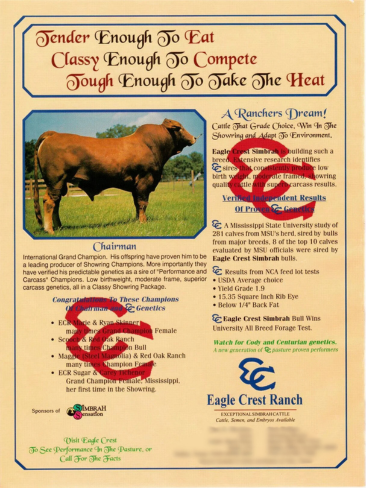
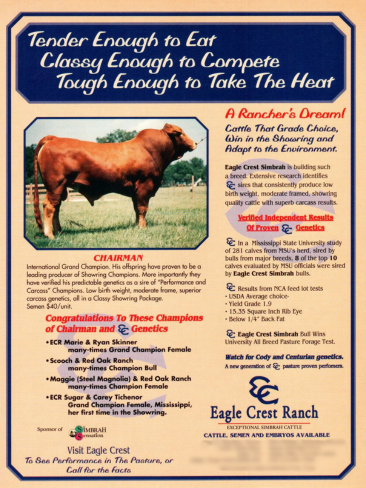
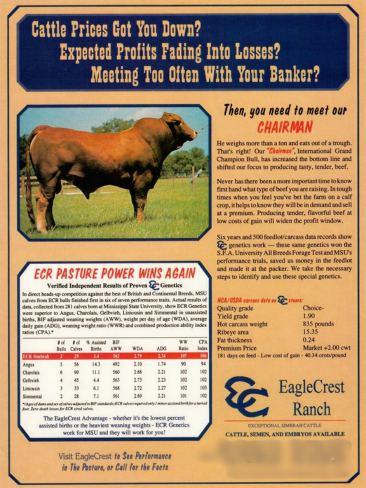
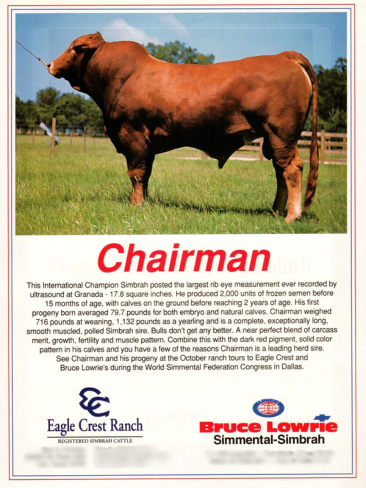
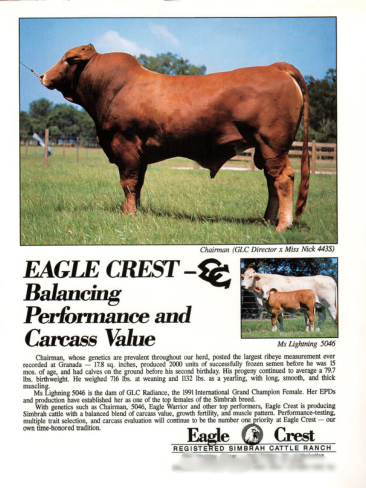
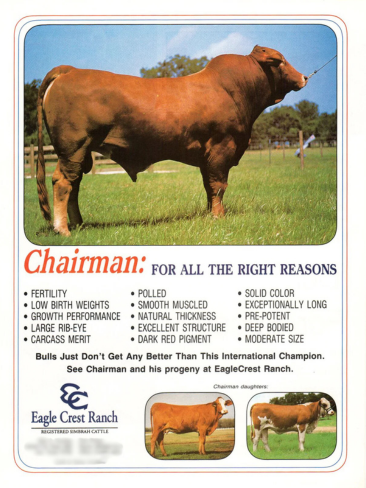
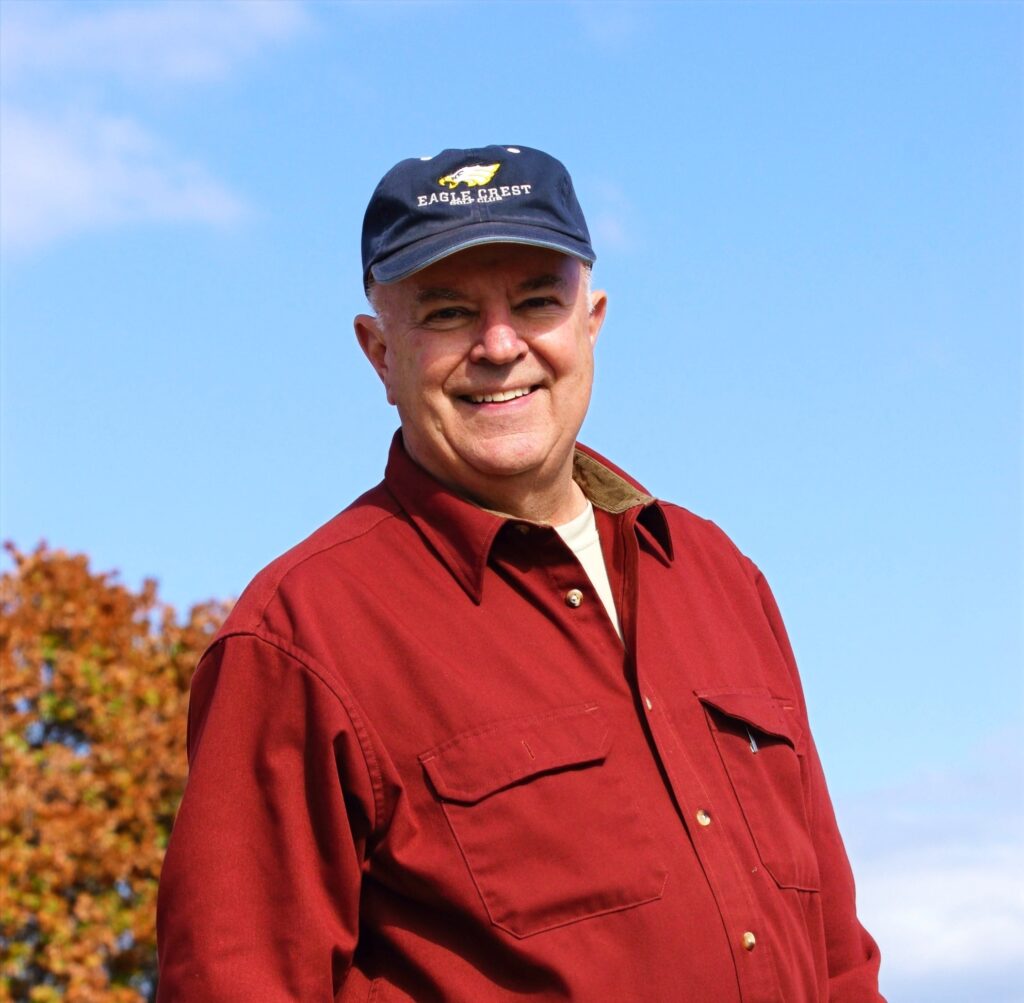
Our history began in 1983, when our founder and owner, Glen Hinckley, entered the cattle business with his Simbrah herd, spearheading the rise of EagleCrest after purchasing Chairman, a champion sire who became the foundation for EagleCrest beef.
We sell cattle, semen, bulls, embryos, and breeding age cows, including our own Cody Beef as well as select Red Angus, Simbrah, and Japanese Red Wagyu. EagleCrest has been featured in countless cattle shows, articles, and medical studies that use our beef as the standard.
EagleCrest is now at the forefront of regenerative and progressive developing an in-house all natural fertilizer called Pasture Tea in addition to utilizing the latest technology to ensure the quality of the beef and land.
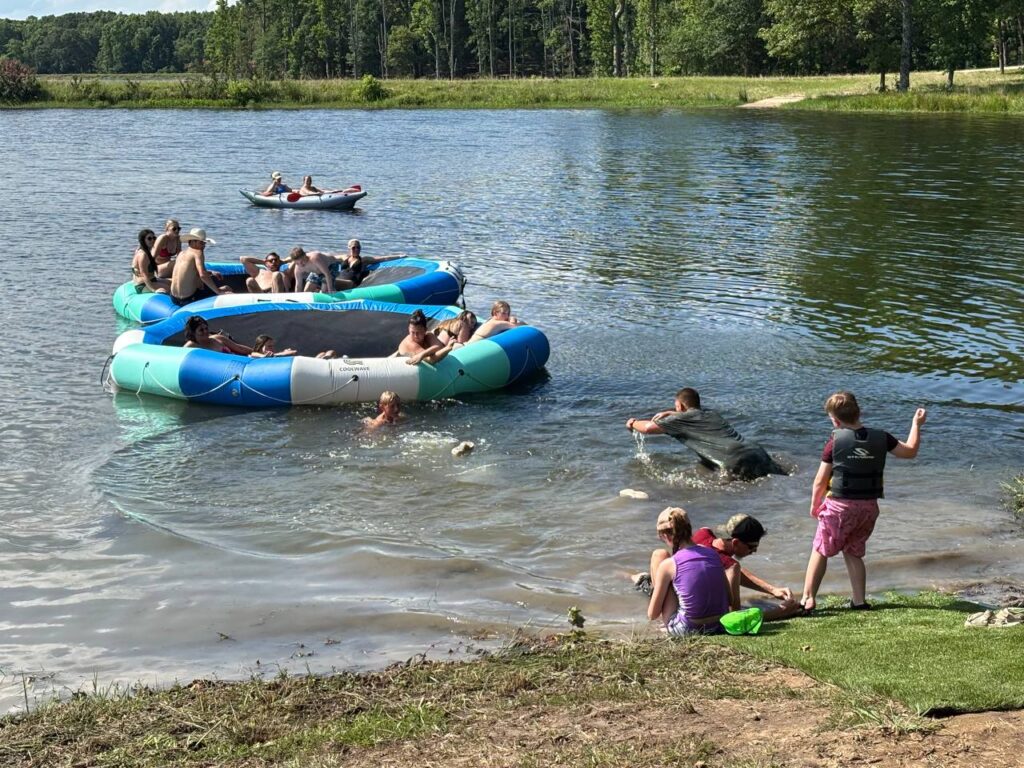
Now in an age where a ranch has to do more than work cattle to survive, a few new areas stick out. EagleCrest plans to roll out their “Steward the Land” initiative where they are offering fishing, retreat, and filming and photography options which are open to the public in an effort to share God’s creation in a new way.
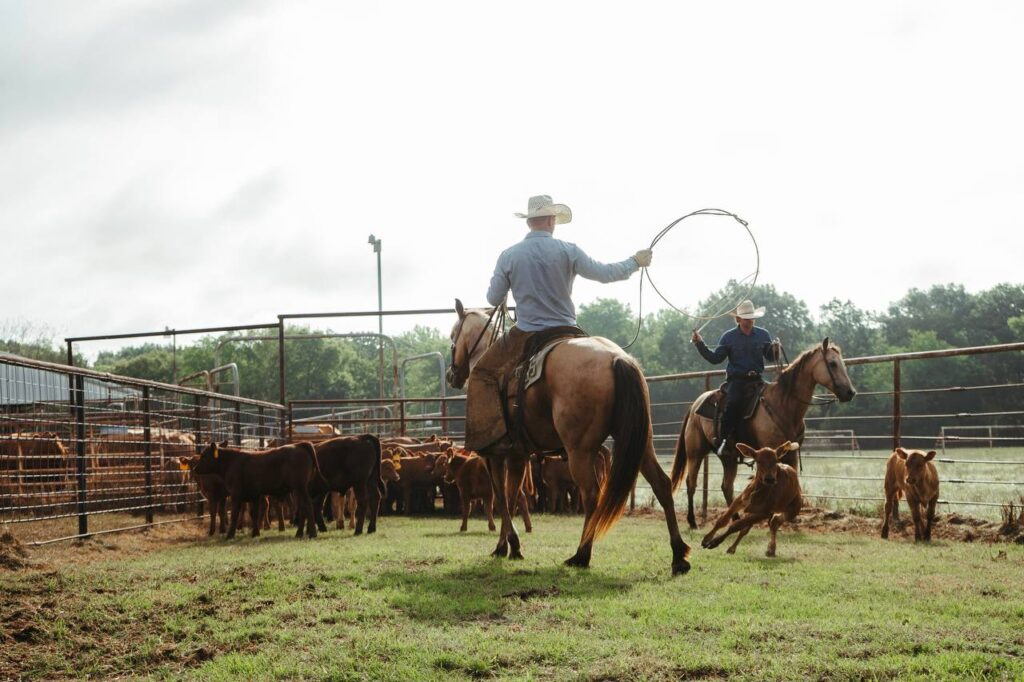
At EagleCrest Ranch, our cow-calf operat tion runs on the rhythm of the East Texas seasons. We keep a herd of mother cows, breed them every year, raise their calves, and sell those calves once they’re big enough for the next phase of the beef supply chain. Our humid, forage-rich piney woods country grows strong Bermudagrass and bahiagrass pastures, which we maintain with Pasture Tea and overseed with winter ryegrass and clover.
Our production year starts in the fall. From October through December, we wean calves (typically at 6 to 8 months old, weighing 500 to 600 pounds), preg-check the cows, and cull any that came up open or didn’t meet our standards. Winter, January through March, is for feeding hay and supplemental protein, monitoring body condition, and watching for the first calves of the spring calving season, which runs from February into April. Cows are rebred from May through July with bulls turned out and watched closely. Summer is spent managing pastures, controlling flies, baling hay for winter, and keeping a close eye on water and forage during the late-summer heat.
By fall, the cycle starts over. Weaned calves are sold at local livestock auctions, retained as replacement heifers, or finished in-house and sent to a local butcher for processing. It’s a patient business that rewards good record-keeping, sound genetics, and healthy pastures. Every decision we make, from the bulls we buy to how we rotate our pastures, comes back to one goal: a healthy calf per cow, every year, raised on grass and good stewardship of the land.
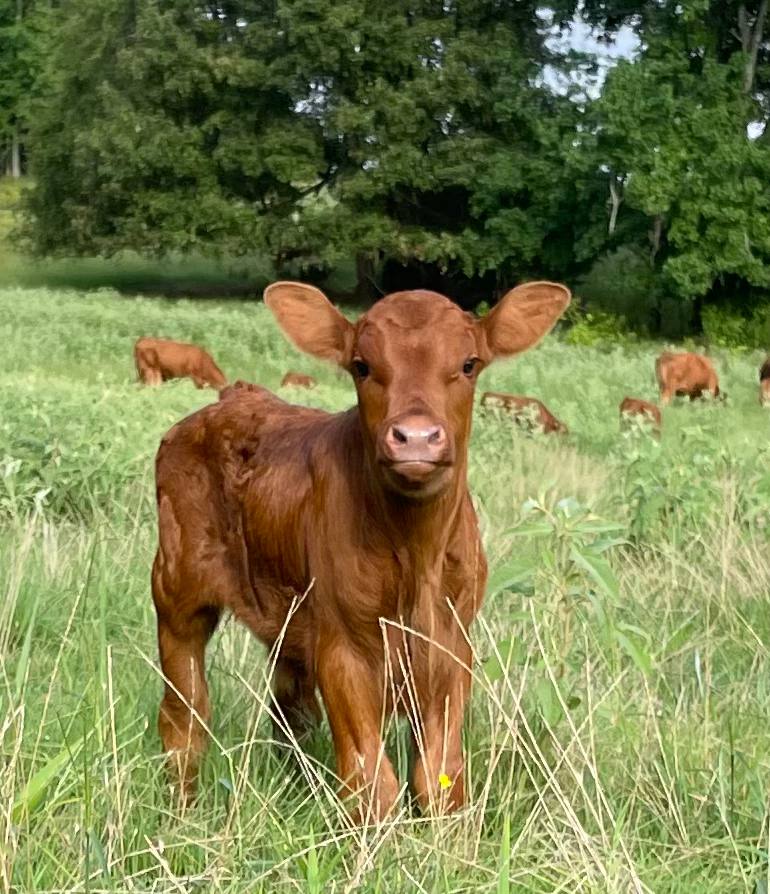
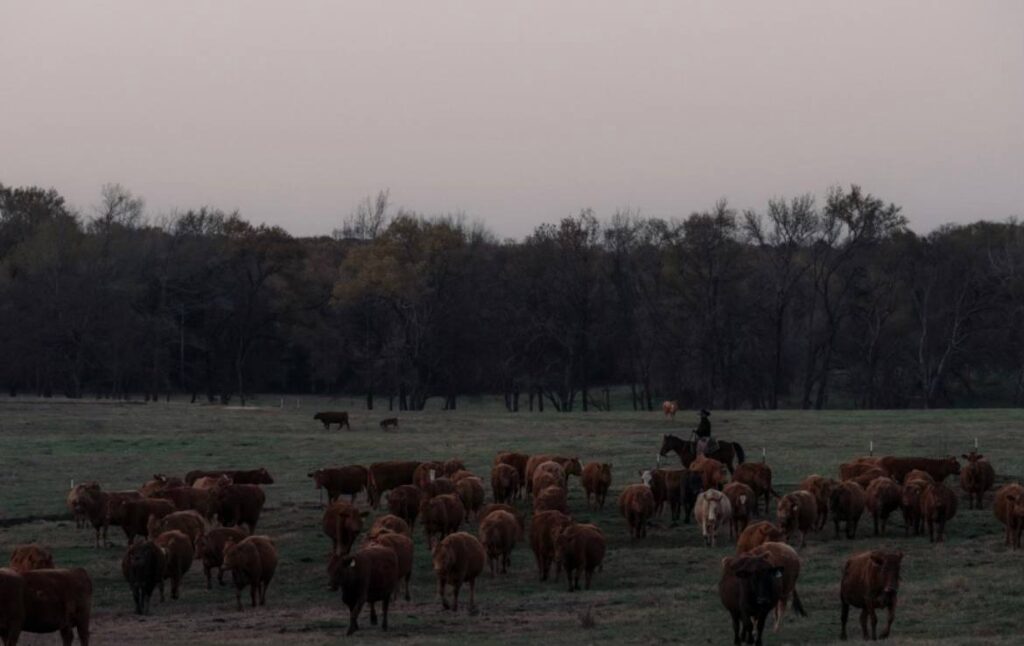
We like to say we’re grass farmers who happen to raise cattle. Grass is what fuels growth in a cow, so we put our focus there, and the results follow. Our approach is built on rotational grazing, an idea introduced by the French in the 1950s and carried forward by pioneers in Zimbabwe and the US in the 90s who realized that grass needed to rest between periods of grazing to recover. Instead of letting cattle graze one pasture down to the dirt, we move them through smaller paddocks, giving each one time to rest and recover. The plants rebuild their root systems, the soil stays covered, and the grass comes back thicker and more nutritious. Mimicking the way wild herds once moved across the land is the most effective grass management tool we have, and it’s the foundation for everything else we do.
Technology has helped us take it further. We’ve transitioned to Halter collars, GPS tracking collars that let us set virtual fences and guide the herd from our phones, so we no longer have to move electric fence every day. Along with rotational grazing, we use Pasture Tea to feed the soil biology and we test our hay quality to make sure our forage is delivering what the herd needs. None of this happened overnight. This has been a long process that’s been going on for years, and only in the past few years have we really seen the land turn around. It’s patient work, but the pastures are healthier, the cattle are thriving, and the land is better each season than the last.
When COVID cut off our access to commercial fertilizer, we were forced to ask a question that changed how we ranch: what if the land could fertilize itself? Pasture Tea grew out of that question. For generations, we chased the dollar with bagged inputs and, in the process, killed much of what made the soil alive. Pasture Tea is our way of getting man outof the way and letting the land do what it was built to do. Instead of forcing growth, we ask what the land actually needs, and that answer changes with every inch of rain. We start at the cellular level, feeding the microbes that feed the roots, which in turn feed the plants.
The recipe is all natural: molasses, decomposing plant matter, fish products, and minerals. When we take care of the microbes, the roots strengthen, the plants become more drought tolerant, and dormant seeds finally get the chance to come up. The whole ecosystem begins to heal, rebuilding what commercial fertilizer stripped away. It’s not a shortcut or a quick fix. It’s patient, regenerative work, and the land shows its thanks every season.
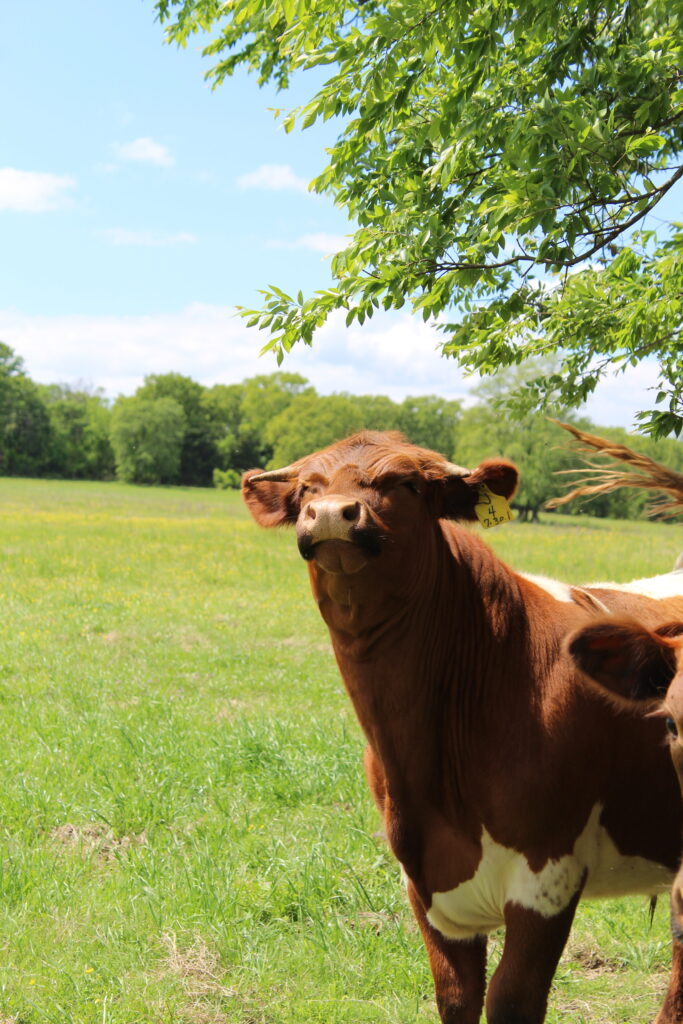
Ministry has been part of EagleCrest Ranch’s purpose since the very beginning. The cattle and the grass pay the bills, but the land was never meant to serve only that end. We’ve always seen the ranch as a place to share with others, and over the years that has meant opening the gates to local churches for retreats.
The ranch has also been the setting for baptisms, which are some of the most meaningful days we’ve had here. Watching someone publicly declare their faith on the same land we’ve worked to restore is a reminder that regeneration is bigger than soil and grass that make it up. We’re also blessed to be close neighbors to the well-known Sky Ranch, whose long history of ministry to families and young people has been an encouragement to us. They’ve been a close friend to EagleCrest, and that friendship has strengthened our mission to be a place where the land, the work, and the Gospel come together.
Persuing Excellence Since 1983